
Key Takeaways
- AI is revolutionizing urology practice management. The key to success lies in selecting tools that integrate seamlessly and demonstrate tangible improvements.
- Automation alleviates clinician burnout and minimizes billing errors, allowing healthcare providers to concentrate on patient care and accurate documentation.
- Urology-Cloud’s All In Intelligence exemplifies the next generation of AI in healthcare: intelligent workflows designed by urologists to eliminate barriers to effective care.
- Discover how All In Intelligence enhances urology practices.
Artificial intelligence is becoming integral to various sectors, and urology is no exception. From surgical scheduling to patient documentation, AI is transforming how urologists manage their daily operations.
However, with rapid adoption comes uncertainty. Which AI tools genuinely benefit private practices? How much disruption is acceptable? And what innovations are merely marketing hype?
During a recent webinar, Dr. Michael Dunn, CEO of Gateway Urgent Care and board member of the Arizona Medical Association, joined Adam Finzen, DPM, Director of Business Development at WRS Health, to help urologists navigate the evolving AI landscape.
The discussion centered on technologies that provide a real return on investment, pitfalls to avoid, and the importance of designing AI solutions that align with how urologists actually work.
Table of Contents
1. AI in Urology: A Growing Necessity
AI has reached a pivotal moment in urology. Recent surveys indicate that many healthcare organizations have adopted AI tools for clinical documentation, yet only a portion report significant success.
Many of these systems are tailored for hospitals rather than specialty practices. Others require separate logins, high subscription fees, or disrupt established workflows, complicating care delivery instead of simplifying it.
Implementing AI Effectively:
Assess AI solutions based on concrete results—time saved, fewer errors, and measurable efficiency gains. The most effective tools should integrate directly into your EHR. If the benefits aren’t clear during the demonstration, reconsider your options.
2. Competing with AI in Urology
AI in urology is no longer optional; it’s becoming essential. Payers are utilizing AI to downcode and pre-screen claims, shifting the competitive landscape. To remain viable, urologists must adopt similar efficiencies.
Dr. Dunn emphasized that practices leveraging AI for coding assistance, claim preparation, and pre-visit documentation are experiencing quicker reimbursements and fewer denials. Automating these tasks helps urologists reclaim valuable time and stabilize revenue.
Implementing AI Effectively:
Identify your most time-consuming administrative tasks—documentation, coding checks, eligibility verification. Begin implementing AI in these areas for the fastest and most visible returns.
3. Current Effective AI Applications
Meaningful advancements in AI within medicine are emerging from focused, task-specific tools rather than large, generic platforms.
- Automated Surgical Scheduling: Streamline appointment management and reduce scheduling conflicts.
- Chronic Condition Management Tools: Enhance patient monitoring and follow-up care through AI-driven insights.
- AI-Enhanced Documentation: Improve accuracy and compliance in clinical records.
- Mobile AI Applications: Provide secure access to patient data and telehealth capabilities.
- Patient Intake Automation: Simplify registration by guiding patients through digital forms prior to their visits.
Integration is crucial; AI that operates within your EHR enhances efficiency, while external tools can create friction.
Implementing AI Effectively:
Choose AI tools that complement your existing systems and workflows. The best technology should seamlessly enhance care delivery without adding complexity.
4. Avoiding AI Pitfalls in Urology
- Predictive diagnostic tools that claim to replace clinical judgment
- Generic solutions not tailored for urology workflows
- Standalone subscriptions that lack integration with your EHR
- Broad promises of efficiency without supporting data
Implementing AI Effectively:
Request evidence from vendors. How does this tool specifically enhance your workflow? Can they provide outcomes from similar urology practices? Clarity and proof are essential for distinguishing genuine innovation from mere hype.
5. Intelligent AI Solutions for Urology
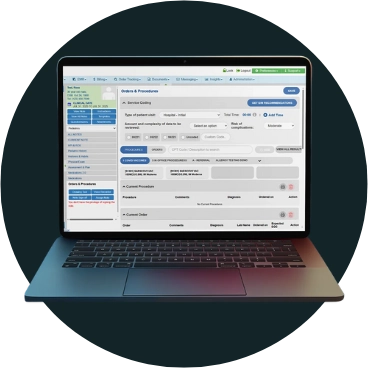
From surgical scheduling to billing and documentation, All In Intelligence streamlines repetitive tasks, reduces clicks, and provides information precisely when needed. Designed by urologists for urologists, these tools help restore balance and focus in modern urology practice.
Implementing AI Effectively:
Examine your current processes to identify inefficiencies. These areas are prime candidates for implementing embedded AI, where it can deliver significant impact quickly.
Intentional AI for Enhanced Care
The key takeaway from Dr. Dunn’s insights is this: the question is not whether to adopt AI, but how to do so with purpose.
With All In Intelligence, Urology-Cloud is redefining how AI supports medical practice—streamlining tasks, connecting data, and enabling clinicians to prioritize patient care.